header-icon-chat
Need assistance?
mobile-basket
Basket

CNC Machines

Shop Clean Agent Suppression
Shop by department

CNC machines perform continuous, automated movements while operating at high speeds and high temperatures. These machines use flammable oils, lubricants, and other metalworking fluids. This combination generates significant friction and heat, which can eventually result in a flash fire. Because CNC machines often run in fully automatic mode without constant human supervision, sometimes 24 hours a day, the risk is further increased, and any fire can develop rapidly before being noticed.

Recommended Products for CNC Machines

Automatic fire extinguishers provide fast, automatic fire protection for CNC machines by detecting heat through heat-sensitive bulbs or tubing. Once detected, these systems extinguish fires without any human intervention and provide 24/7 unmanned protection.

Where To Position Your Automatic Fire Extinguisher

CNC machines contain multiple ignition sources, so protection should focus on the highest-risk compartments.

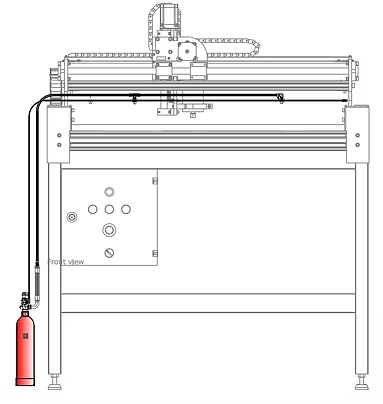
The electrical control cabinet should always be the primary location for an automatic fire extinguisher, as it contains power supplies, drives, inverters, transformers, and high-current wiring that are prone to overheating or electrical failure. The extinguisher should be mounted inside the cabinet or directly above it so the suppression agent can quickly and unobstructed flood the enclosure.

A second extinguisher is often recommended outside of the machine enclosure (around the cutting area), where high temperatures, friction, and flammable coolants or lubricants increase the risk of flash fires; this unit should be installed away from moving parts to allow effective dispersion.

cnc-machine-diagram

Buying Guide

Fire Class

Description

Examples

Extinguisher Type

Class A

Ordinary Combustibles

Paper, Wood, Cardboard, Fabrics

Water, Foam and Dry Powder

Class B

Flammable Liquids

Petrol, Paint, Solvents, Alcohol

Foam, CO2 and Dry Powder

Class F

Cooking Oils & Fats (Commercial Kitchens)

Deep Fat Fryers, Vegetable Oils

Wet Chemical

Electrical

Electrical Fires (Faulty Plugs)

Faulty Plugs and Overloaded Sockets

CO2

Trustpilot